 How Our Company Details Ended Up on a Fake Website12 Sept 2026What happens when a fake website uses your real company details? We experienced it ourselves. Here’s how it can affect customers, search engines and AI, and what businesses can do about it.
 Your Website Has an AI Security Problem10 Sept 2026AI is quickly becoming another standard website feature. Customer service chatbots answer questions, AI search tools dig through documentation, assistants recommend products, and increasingly capable agents can perform actual tasks on behalf of users.
That sounds useful. It also changes something fundamental about website security.
Traditional websites are mostly built around predictable interactions. A form expects an email address. A search field expects a query. A checkout expects a product and payment details. AI systems are different. They accept natural language, interpret what someone wants, and sometimes decide what to do next.
That flexibility is exactly what makes AI powerful. It is also what makes it difficult to secure.
The problem isn't that your website uses AI. The problem starts when you give AI access to data, tools, or actions without treating it as an untrusted part of your system.
 Your Website Probably Doesn't Need That Cookie Banner14 Jul 2026GDPR / AVGVisit almost any website today and you'll be greeted by the same thing before you've even read the first sentence: a cookie banner asking for your consent.
For many businesses, adding a cookie banner has become almost automatic. Launch a new website, install Google Analytics, add a consent plugin, and move on. But here's the surprising part: not every website actually needs one.
In many cases, the cookie banner exists because unnecessary tracking tools were added in the first place. If your website respects privacy by design, you may be able to avoid the banner altogether.
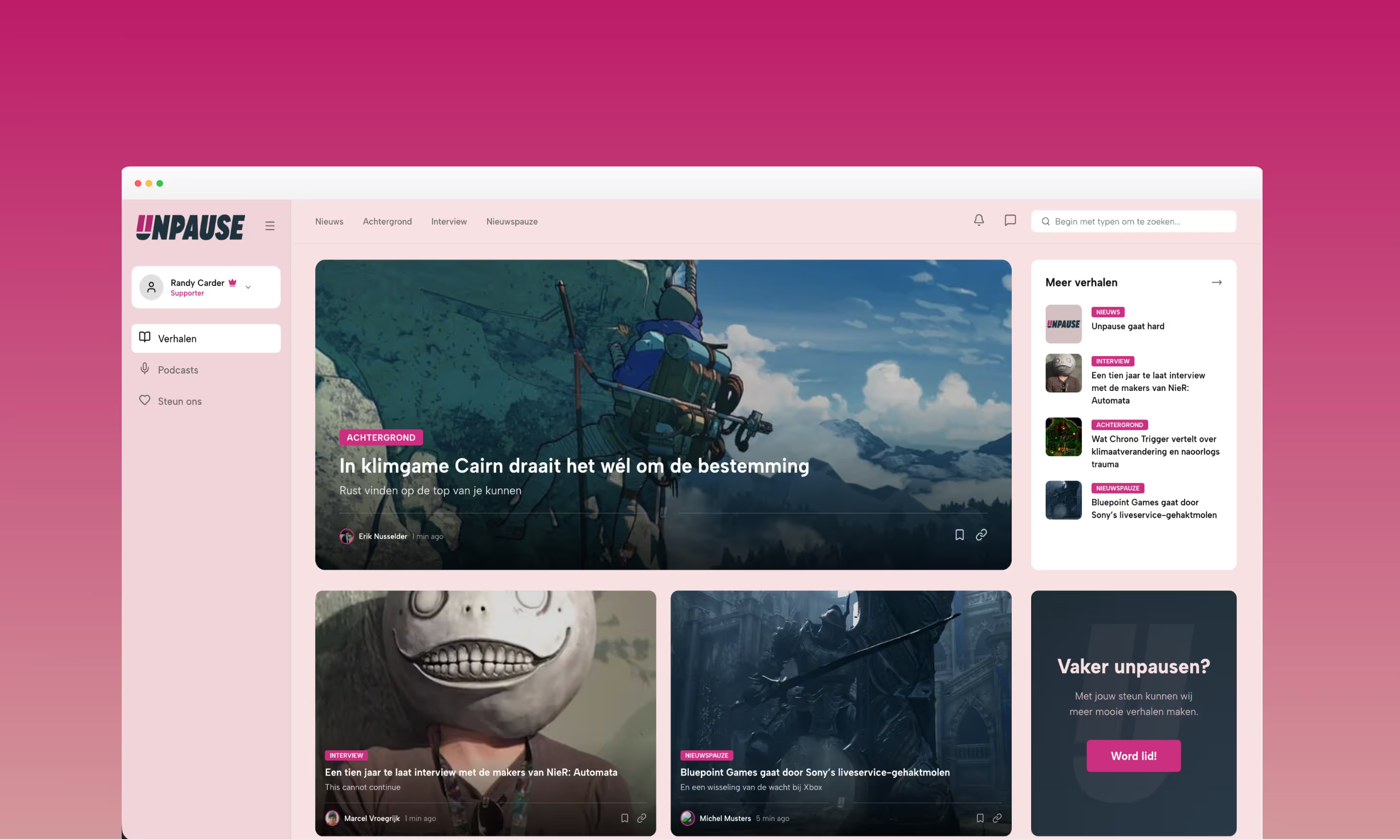 Behind the Scenes: A Security Review of Unpause10 Jul 2026Behind the AuditWhen we build or review websites, we don't just look at design or performance. We also pay close attention to security.
 How Many WordPress Plugins Is Too Many?30 Jun 2026WordPressOne of the biggest advantages of WordPress is its enormous plugin library. Need a contact form? There's a plugin. Want better SEO? There's a plugin. Looking for a booking system, image gallery, or cookie banner? There are hundreds to choose from.
It's easy to keep adding new features until your website is running dozens of plugins.
But how many is too many?
The truth is, there isn't a magic number. A website with 40 well-built plugins can perform better than one with 10 poorly maintained ones. The real problem isn't the quantity. It's what those plugins are doing behind the scenes.
Here are the five biggest signs your website is relying on too many plugins.
 You're Measuring the Wrong Numbers29 Jun 2026ConversionWhen businesses talk about website performance, the conversation usually starts with traffic.
How many visitors did we get this month?
Did our rankings improve?
How many page views did we have?
These numbers are easy to track, but they rarely tell the full story. A website with thousands of visitors can still generate very little business, while a website with fewer visitors can consistently bring in high-quality leads.
The most important metrics aren't always the biggest ones. Here are the five numbers that matter far more than traffic.
 Why Your Website Doesn't Need More Traffic27 Jun 2026ConversionWhen business owners want more sales, the first thing they usually ask for is more website traffic.
More SEO. More Google Ads. More social media campaigns.
It sounds logical. More visitors should mean more customers.
But that's often not the case.
If your website struggles to convert the visitors you already have, bringing in more traffic simply means more people leaving without taking action. Before investing in getting more visitors, it's worth asking a different question: is your website actually turning visitors into customers?
Here are the five biggest reasons more traffic won't solve your problem.
 Why Your Website Is Difficult for Machines to Understand26 Jun 2026AIYour website may look modern, load quickly, and offer a great experience for visitors. But there's another audience you need to think about: machines.
Search engines, AI assistants, and other automated systems don't see your website the way people do. They don't admire your design or appreciate clever copywriting. Instead, they scan your code, analyse your structure, and try to understand exactly who you are and what your business does.
If they can't do that confidently, your visibility suffers. Here are the five biggest reasons machines struggle to understand your website.
 Why Your WordPress Plugins Are a Security Risk25 Jun 2026WordPressWordPress powers more than 40% of all websites on the internet, and for good reason. It's flexible, easy to manage, and has an enormous ecosystem of plugins that let you add almost any feature with a few clicks.
But that convenience comes with a downside.
Most hacked WordPress websites aren't compromised because WordPress itself is insecure. They're hacked because of outdated, poorly maintained, or unnecessary plugins. Every plugin you install adds more code to your website, and every piece of code is another potential entry point for attackers.
Here are the five biggest security risks hiding in your WordPress plugins.
 Why ChatGPT Doesn't Recommend Your Website24 Jun 2026AIMany business owners assume that if their website ranks in Google, AI tools like ChatGPT will recommend them too.
Unfortunately, that's not how it works.
ChatGPT isn't looking for websites with the most keywords. It's looking for businesses it trusts. If your company lacks authority, credibility, or clear expertise signals, you may never appear in AI-generated recommendations, even if your SEO looks decent on paper.
Here are the five biggest reasons ChatGPT ignores your website.
 Building Websites with AI: 5 Real Pros and 5 Hidden Cons23 Jun 2026AIArtificial intelligence has completely disrupted how we think about web development. Tools can now generate a functional webpage from a single text prompt. For business owners and non-technical managers, this looks like pure magic. You type a prompt, and a sleek, modern website appears on your screen.
However, there is a massive gap between a website that looks good on the surface and one that actually performs well, secures data, and ranks on search engines.
Below is a no-nonsense breakdown of the five biggest advantages and the five hidden risks of using AI to build your website.
