Building Websites with AI: 5 Real Pros and 5 Hidden Cons

Jorg
Founder & CEO
Artificial intelligence has completely disrupted how we think about web development. Tools can now generate a functional webpage from a single text prompt. For business owners and non-technical managers, this looks like pure magic. You type a prompt, and a sleek, modern website appears on your screen. However, there is a massive gap between a website that looks good on the surface and one that actually performs well, secures data, and ranks on search engines. Below is a no-nonsense breakdown of the five biggest advantages and the five hidden risks of using AI to build your website.
The 5 Biggest Advantages of AI in Web Development
1. Unmatched Speed and Rapid Prototyping
Building a website layout from scratch traditionally takes days or weeks. AI cuts this down to minutes. If you need a wireframe or a mockup to visualize an idea, AI can generate options instantly. This accelerates the initial phase of development, allowing teams to test layouts and concepts without investing massive hours upfront.
2. Automating Tedious, Repetitive Tasks
Web development involves a lot of repetitive work, such as writing basic HTML structures, setting up standard CSS grids, or converting data formats. AI excels at handling these mundane tasks. By offloading the routine work to an AI assistant, human developers can focus their energy on complex features and user experience.
3. Instant Troubleshooting and Bug Hunting
When code does not work, finding the error can feel like searching for a needle in a haystack. AI tools can analyze hundreds of lines of code in seconds to pinpoint a missing semicolon or a broken link. For non-technical users, it can translate cryptic error messages into plain English and suggest immediate fixes.
4. Lowering the Entry Barrier
You no longer need a degree in computer science to launch a functional web application. AI acts as an interpreter between human intent and machine code. This allows entrepreneurs and small business owners to build basic tools, landing pages, and prototypes without hiring an expensive development team right out of the gate.
5. Seamless Content and Asset Generation
A website needs placeholders, copy, and images to feel alive. Integrated AI tools can generate placeholder text, write initial SEO meta descriptions, and even create custom graphics on the fly. This streamlines the content staging process, ensuring the design and the copy develop alongside each other.
The 5 Critical Risks of AI in Web Development
1. The Illusion of Perfection (The Messy Codebase)
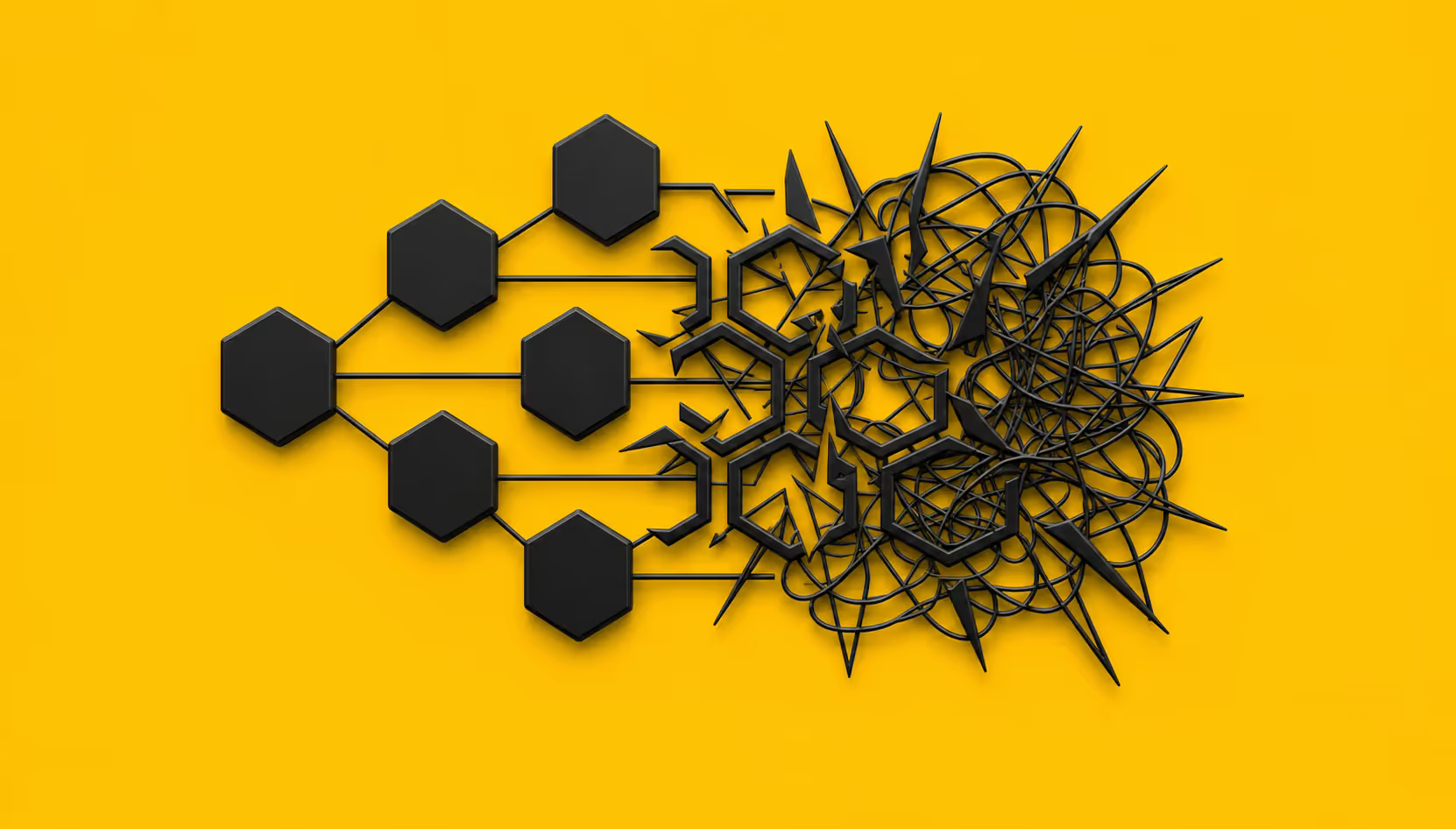
This is the most common trap for non-technical users. An AI-generated website might look stunning on your browser, but underneath the surface, the code is often an unoptimized mess. AI frequently generates redundant lines, outdated scripts, and bloated files.
Think of it like a house with a beautifully painted facade but terrible plumbing. Bloated code slows down your page load speed, which directly damages your user experience and tanks your SEO rankings. Search engines reward clean, fast-loading sites, and AI rarely delivers that out of the box.
2. Blind Trust (Treating AI Code as Absolute Truth)
AI does not understand code; it predicts patterns based on its training data. Because of this, AI tools confidently generate completely fabricated solutions, a phenomenon known as hallucination. If you accept AI code as absolute truth without verification, you risk deploying broken logic, broken links, or functions that fail under real user traffic. You must have someone verify the logic before going live.
3. Data Leaks and the Danger of Open APIs
Many popular, free AI tools operate on open models. When you paste your custom code, database structures, or proprietary business logic into these prompts, that data is absorbed into the public training model. Even worse, if the AI suggests using open, unsecured Application Programming Interfaces (APIs) to connect services, you could inadvertently expose your customer data to hackers. Security requires a level of strict compliance and caution that public AI models simply do not possess.
4. Lack of True Creativity and Brand Identity
AI tools are trained on existing websites, meaning they can only replicate what has already been done. If you rely solely on AI for your web design, your site will look like a generic blend of the top 100 sites in your industry. It lacks the nuanced understanding of human emotion, unique brand identity, and unconventional design choices that make a company stand out from its competitors.
5. Nightmare Maintenance and Tech Debt
A website is not a one-time project; it requires continuous updates, security patches, and scaling. When a human developer writes code, they organize it logically so it can be updated later. AI creates code in a vacuum. Six months down the road, when you want to add a new feature or fix an issue, a human developer will have to spend hours untangling the disorganized AI code before they can even begin working. This creates massive "technical debt" that costs more to fix later than building it right the first time.
Jorg's 2 cents
AI is an incredibly powerful assistant, but it is a terrible master. The ideal approach to modern web development is a hybrid model. Use AI to brainstorm, automate repetitive tasks, and speed up your workflow. However, never bypass human oversight. You still need experienced developers to clean up the code, secure your APIs, optimize for search engines, and ensure your website is built on a stable, long-term foundation.