Why Your WordPress Plugins Are a Security Risk

Jorg
Founder & CEO
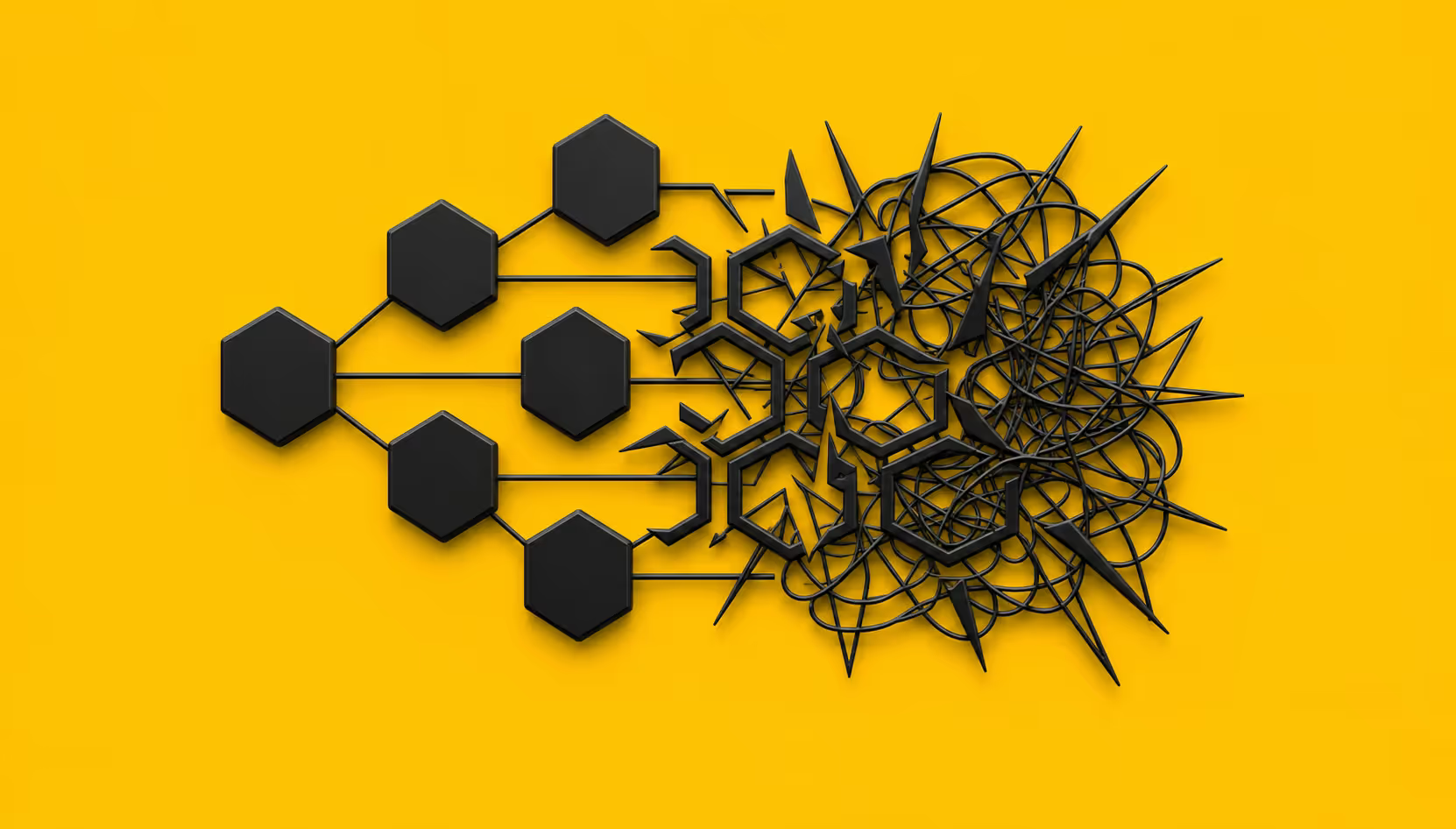
WordPress powers more than 40% of all websites on the internet, and for good reason. It's flexible, easy to manage, and has an enormous ecosystem of plugins that let you add almost any feature with a few clicks. But that convenience comes with a downside. Most hacked WordPress websites aren't compromised because WordPress itself is insecure. They're hacked because of outdated, poorly maintained, or unnecessary plugins. Every plugin you install adds more code to your website, and every piece of code is another potential entry point for attackers. Here are the five biggest security risks hiding in your WordPress plugins.
Outdated Plugins Are an Open Door for Hackers
One of the most common reasons WordPress websites get hacked is surprisingly simple: plugins that haven't been updated.
When developers discover a security vulnerability, they usually release a patch quickly. If you delay installing that update, your website remains exposed while attackers actively scan the internet for known weaknesses.
Hackers don't manually target websites. Automated bots continuously search for outdated plugins and attempt to exploit them within seconds. A plugin that's only a few versions behind can be all it takes to compromise your entire website.
Too Many Plugins Create Too Many Risks
It's easy to keep installing plugins because each one solves a specific problem. A contact form here, an SEO tool there, maybe a popup builder and a page speed optimizer.
Before you know it, your website is running 30 or 40 plugins from different developers.
More plugins mean more code to maintain, more updates to install, and more opportunities for something to go wrong. Even if every plugin is well built, they don't always work well together. Conflicts between plugins can create unexpected security issues that are difficult to detect until it's too late.
Free Doesn't Always Mean Safe
There are thousands of excellent free WordPress plugins.
There are also thousands that are poorly maintained or completely abandoned.
Some plugins stop receiving updates after just a few years, while others are managed by a single developer with limited resources. If security issues are discovered, they may never be fixed.
Before installing any plugin, it's worth checking when it was last updated, how many active installations it has, and whether the developer is still actively maintaining it. Choosing a well-supported plugin can significantly reduce your security risks.
One Vulnerable Plugin Can Compromise Your Entire Website
Many website owners assume that if one plugin has a problem, only that feature is affected.
Unfortunately, that's rarely the case.
A vulnerable plugin can give attackers access to your entire WordPress installation. From there, they may install malware, redirect visitors to malicious websites, steal customer information, or even gain full administrator access.
It only takes one weak link to put your entire website at risk.
Unused Plugins Are Still a Liability
Deactivating a plugin is not the same as removing it.
Inactive plugins still exist on your server, and if they contain known vulnerabilities, they can sometimes still be exploited.
Many websites collect unused plugins over the years as features are replaced or redesigned. They serve no purpose, yet they continue to increase the attack surface of the website.
If you no longer use a plugin, delete it completely. Fewer plugins mean fewer security risks and a cleaner website overall.
Jorg's 2 Cents
Plugins are one of the reasons WordPress is so powerful, but they also require responsibility.
Installing every plugin that promises a new feature is rarely a good long-term strategy. A smaller collection of trusted, actively maintained plugins is almost always safer than dozens of unnecessary additions.
Good website security isn't about reacting after something goes wrong. It's about reducing the number of things that can go wrong in the first place.
When it comes to WordPress plugins, less is often more.